News & Events
Events, updates and insights from My Mobility Code™
Explore events, insights and updates
Use the links below to jump straight to webinars, articles and the latest updates from My Mobility Code™.
What If Your Bones Are Not Getting the Message?
Why stronger bones need the right biological signals and the right movement load.
Bone is living tissue. It responds to signals from movement, nutrition, hormones, inflammation, recovery and DNA. In this webinar, Amanda Archibald and Darryl Frerk explore how biology and movement work together to support stronger bones.
You have been given advice, but still want a clearer plan.
- You have been diagnosed with osteopenia or osteoporosis and want a more complete understanding.
- You were told to take calcium and vitamin D, but still feel unsure about what your bones truly need.
- You were advised to walk more, lift weights or do weight-bearing exercise without knowing what is right for your body.
- You are worried about falling, fracturing or doing the wrong exercise.
- You want movement guidance based on your structure, alignment and current capacity, not a generic exercise list.
Why weight-bearing is not always the same as bone-building.
- What signals bone to remodel, repair and rebuild.
- Why simply doing weight-bearing exercise may not be enough.
- How alignment and symmetry change where force travels.
- Why inflammation, poor recovery and nutrient handling may affect adaptation.
- How DNA can offer clues about your internal environment.
- Why the right movement for one person may not be the right load for another.
Bone health requires more than a prescription and an exercise list. It requires understanding your biology and how your body receives force.
Amanda Archibald and Darryl Frerk

Amanda Archibald
Amanda brings the biological lens, including DNA, inflammation, nutrient handling, hormones and recovery.

Darryl Frerk
Darryl brings the movement lens, including alignment, symmetry, compensation, loading and body mechanics.
Reserve your spot
Join Darryl Frerk and Amanda Archibald for a practical, science-led conversation on why stronger bones need both the right biological signals and the right movement load.
Also: 2pm Eastern Time / 11am Pacific Time
Not in this time zone? Check your local time here.
Complete the form to reserve your place. We will send you the webinar details and reminders closer to the date.
Register for the webinar
Fill in your details below to save your place.

The Future of Longevity Is Not Just Healthspan. It Is MobilitySpan™.
Watch Amanda Archibald of The Genomic Kitchen and Darryl Frerk of Human Symmetry introduce My Mobility Code™.
Watch the free webinar replay
Enter your name and email address below to access the replay.
My Mobility Code™ is a personalised approach to strength, recovery and lifelong movement, built around how your body is designed.
In this session, Amanda and Darryl explore how DNA, posture, movement and recovery all play a role in helping you move better, feel stronger and stay active for longer.
Is Your Body Asking for a Smarter Movement Plan?
You have worked hard to stay active, strong and capable. You may already be training, seeing a personal trainer, working with a biokineticist, physio or specialist, or doing what you have been told to do. But when pain, recurring injuries, stiffness, bone health concerns, poor recovery or fear of movement keep getting in the way, it can be hard to know what your body really needs next. Answer these quick questions to see whether My Mobility Code™ may be the right next step for rebuilding strength, stability, confidence and long-term mobility.
Your body may not be asking you to stop. It may be asking for a smarter strategy.
My Mobility Code™ helps you understand how your body moves, where it compensates, and why pain, stiffness, recurring injuries or stalled progress may keep showing up, even when you are already training or seeking support.
What makes this approach different is that we look at your body from two perspectives:
Your Biological Architecture
How your DNA may influence connective tissue, inflammation, recovery, muscle function, bone health, injury risk and how well your body adapts to load.
Your Movement Architecture
How your body actually moves, stabilises, compensates and distributes force in real life.
Together, these insights help us build a more personalised plan, one that considers both your internal blueprint and your physical structure.
This is not another generic fitness plan. It is a personalised approach designed to help you move better, protect your body, understand your patterns and stay active for the years ahead.
This quiz is for general guidance only and is not a medical diagnosis. If you have pain, injury, a recent diagnosis or any health concern, please seek advice from a qualified healthcare professional.
The Future of Longevity Is Not Just Healthspan. It Is MobilitySpan™
Discover how My Mobility Code™ combines DNA insights, posture, movement and recovery analysis to help you move better, recover smarter and stay active for longer.

For years, the conversation around ageing well has focused on healthspan. We have been encouraged to think not only about living longer, but about living better for longer. That matters. But there is another part of longevity that deserves more attention: MobilitySpan™.
MobilitySpan™ is about how well you can keep moving through the years you have. It is about strength, recovery, posture, balance, confidence and independence. Living longer is important, but being able to walk comfortably, climb stairs, get up from the floor, travel, train, recover and trust your body is what gives those years real quality.
This was the central theme of the launch webinar for My Mobility Code™, hosted by Amanda Archibald of The Genomic Kitchen and Darryl Frerk of Human Symmetry. Together, they introduced a more personalised way to understand strength, recovery and lifelong movement by looking at both the inside and outside of the body.
Why MobilitySpan™ Matters
Mobility is often reduced to exercise, stretching or flexibility, but it is much more than that. Mobility is connected to how confidently you move through life.
When movement becomes restricted, people often start making their lives smaller without realising it. They avoid stairs. They stop running. They stop lifting. They stop joining activities. They begin to move less because they are worried about pain, injury or not being able to keep up.
Over time, this affects more than the body. It can affect confidence, mood, identity and quality of life. That is why MobilitySpan™ is such an important part of the longevity conversation.
The future of longevity is not only about living longer. It is about staying mobile enough, strong enough and confident enough to keep living well.
Your Body Is Not Generic. Your Plan Should Not Be Either.
Many people reach midlife having already tried a long list of solutions. They have followed diet plans, exercise programmes, stretching routines, physio advice, supplements and recovery protocols. Some of these may have helped for a while, but the same issues often return.
That recurring pattern is one of the reasons My Mobility Code™ was created. The approach recognises that pain, poor recovery, recurring injuries and movement plateaus are rarely caused by one isolated factor. They often sit at the intersection of biology, structure, movement habits, recovery capacity and lifestyle.
A person may not be unfit. They may be under-recovered. They may not be failing. They may be following a plan that does not match their body. They may not need more generic advice. They may need a clearer understanding of what their body is actually asking for.
The Inside View: DNA, Recovery and Biological Insight
The first part of the My Mobility Code™ approach is the inside view of the body. This includes genetic insight, inflammation patterns, recovery capacity, collagen synthesis, nutrient needs, pain response, metabolic tendencies and the biological systems that influence how well the body repairs and adapts.
DNA does not determine everything, but it can provide useful clues. It can help explain why one person recovers quickly from training while another feels drained for days. It can also offer insight into why someone may be more prone to inflammation, soft tissue problems, tendon issues or prolonged soreness.
This is where the work of The Genomic Kitchen becomes so valuable. Amanda Archibald’s approach looks at the body’s biological architecture and helps identify internal bottlenecks that may be limiting progress.

The Outside View: Posture, Movement and Structural Patterns

The second part of the My Mobility Code™ approach is the outside view of the body. This includes posture, alignment, balance, compensation patterns, joint function and how the body loads through real-life movement.
This is where the work of Human Symmetry comes in. Darryl Frerk’s movement approach looks at how structural misalignments, protective movement patterns and long-standing compensations can affect the way a person moves, feels and performs.
By looking at both the inside and outside of the body, My Mobility Code™ helps create a more complete picture. It is not just about what hurts. It is about why the pattern may be there, what the body is protecting and what support it needs next.
Your Biological Architecture
DNA, inflammation, recovery, tissue repair, nutrient needs, pain response and the biological patterns that influence repair and adaptation.
Your Movement Architecture
Posture, alignment, balance, compensation, load and how your body actually moves in real life.
Doing Everything Right, but Still Not Seeing Progress?
One of the most common frustrations for active adults is feeling like they are doing everything right but still not seeing the results they expect. They may be eating well, training consistently and trying to stay disciplined, yet their body does not seem to respond in the way it used to.
This can be especially frustrating for people who have always seen themselves as fit, active or capable. When progress stalls, it can feel like failure. But often, the issue is not effort. The issue is fit.
A generic training plan may not match someone’s recovery capacity. A nutrition plan may not support their metabolic needs. A high-intensity programme may be too much for their current inflammation load.
Recovery Is Not One-Size-Fits-All
Poor recovery is one of the clearest signs that a plan may not be aligned with the person. If training leaves someone drained for days, if soreness lingers longer than expected, or if sleep is disrupted, the body is giving useful information.
Recovery is not just rest. It is a biological process. It depends on sleep, nutrition, nervous system regulation, inflammation control, tissue repair, hormone balance, movement quality and the amount of load the body is being asked to absorb.
The goal is not to do less forever. The goal is to find the level of challenge the body can adapt to, rather than continually pushing it into fatigue, pain or flare-ups.

Recurring Injuries Usually Have a Pattern
Recurring injuries are rarely random. Soft tissue strains, tendonitis, ligament issues, joint flare-ups and repeated pain cycles often have a pattern behind them. That pattern may involve structural alignment, tissue repair capacity, training load, recovery limitations, inflammation or an old protective compensation that has never fully resolved.
For example, someone may repeatedly experience knee pain, but the real issue may involve the pelvis, hip, ankle or foot mechanics. Another person may keep getting tendon problems because their training load is too high for their current recovery capacity.
By combining DNA insight with biomechanical movement analysis, My Mobility Code™ looks at both the repair environment and the movement pattern. This helps make the plan more specific, more realistic and more supportive of long-term progress.
Bone Health Is Movement Health
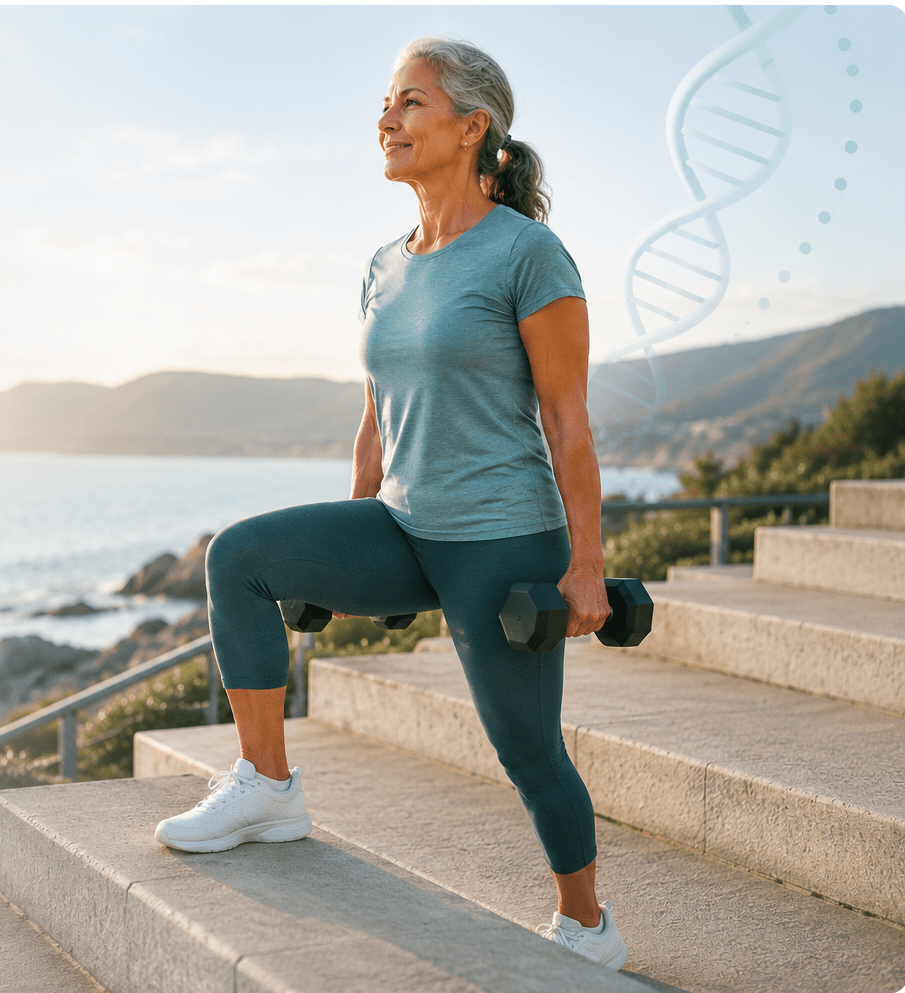
Osteoporosis, osteopenia and bone density concerns are also part of the MobilitySpan™ conversation. Bone health is not only about age. It can be influenced by genetics, nutrition, hormones, muscle strength, loading patterns, posture, balance and recovery.
For many people, a bone density diagnosis creates fear. They may worry about falling, fracturing or doing the wrong type of exercise. That fear is understandable, but it can also lead people to do less.
My Mobility Code™ supports a smarter approach. The aim is not to scare people into action, but to help them understand how to move safely, load appropriately and build a body that supports them for the long term.
Why Conflicting Advice Leaves People Stuck
There is more health and fitness advice available than ever before. Eat more protein. Eat fewer carbohydrates. Lift heavier. Train less. Do more cardio. Avoid cardio. Take this supplement. Stop taking that supplement. Push harder. Slow down.
For many people, the problem is not that they do not care. The problem is that they are overwhelmed by advice that is not specific to them.
A personalised approach can reduce the noise. Instead of following every new trend, My Mobility Code™ helps people understand their own body’s signals. It helps identify where support may be needed, whether that is recovery, mobility, strength, nutrition, tissue repair, inflammation, posture or movement confidence.
The goal is simple: stop guessing and start understanding what your body actually needs.
Who Is My Mobility Code™ For?
My Mobility Code™ is designed for people who want a more personalised approach to strength, recovery and lifelong movement.
It is especially relevant for adults who feel frustrated by lack of progress despite doing many of the right things, people dealing with recurring injuries or chronic flare-ups, and those who feel that their body no longer responds the way it used to.
Most importantly, it is for people who do not want to give up on movement. It is for people who want to stay active, independent and confident for longer.
The Future of Longevity Needs MobilitySpan™
The future of longevity is not only about living longer. It is about staying mobile enough, strong enough and confident enough to keep living well.
That is why MobilitySpan™ matters. It brings the conversation back to what people actually want from their bodies: the ability to move, recover, adapt, participate and remain independent.
My Mobility Code™ brings together DNA insights, posture, movement analysis and recovery support to help people build a clearer path forward. It is not about another generic plan. It is about understanding the individual body and creating a smarter strategy for strength, recovery and lifelong movement.
The future of longevity is not just healthspan. It is MobilitySpan™.
Ready to understand what your body needs next?
Watch the My Mobility Code™ webinar replay or book your free consultation to explore whether this is the right next step for your movement, recovery and long-term mobility.